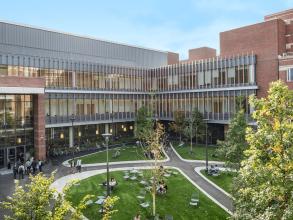
Photo by Harvard Kennedy School on Google Mapshttps://maps.app.goo.gl/M3G1QcMmAMB2xJpH9
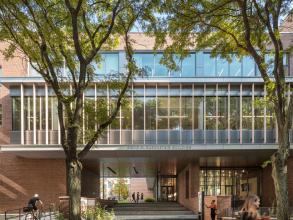
Published by Harvard Kennedy School on Google Mapshttps://maps.app.goo.gl/WnQP7DBqiEaAtRe97
A Visiting Fellowship in Science, Technology and Society at Harvard
Exploring the Intersections of AI Policy, Digital Government, and the History of Computation
Supported by the ESRC's funding, I spent three months (September to December 2024) as a Visiting Fellow in the Program on Science, Technology and Society at Harvard Kennedy School. The overseas institutional visit represented a unique opportunity to engage with one of the world's leading centres for research on the intersection of science, technology, and public policy. I knew I wanted to work with Professor Sheila Jasanoff, a pioneering figure in Science and Technology Studies who's research I had encountered during my Masters and had subsequently heavily influenced my doctoral research. More broadly, I was attracted to the Harvard Kennedy School's unrivaled convening power, particularly in technology policy. It didn't dissappoint - on my first day, I asked someone for directions only to realise afterwards they were a sitting US Governor.
My research examines the history of government computerisation across the United Kingdom, the United States, and the technology contractors who sell to both. The project contextualises present debates about Artificial Intelligence, Digital Government, and technological dependence within a forty-year trajectory, examining the persistent tension in the state's relationship with technology between buying the future and inheriting the past. Guided by Profesor Jasanoff, and a supportive community of other fellows, the Harvard visit aimed to refine my research questions, test theoretical frameworks, and build comparative understanding of US approaches to technology procurement and digital government. I also had the opportunity to engage directly with scholars who had already shaped my thinking, such as Professor Steve Kelman, and meet others, such as Professor Marc Aidinoff who transformed how I think about my topic.
The visit combined intensive coursework with active participation in the STS community. I audited four specialist courses across Harvard and MIT: International Law and Global Affairs at Harvard Law School, Introduction to Science and Technology Studies at MIT, Science, Power, Politics at Harvard Kennedy School, and Thinking with Computers in Harvard's History of Science department. This cross-institutional access, a particular strength of the Boston academic ecosystem, allowed me to draw connections between unlikely disciplines and topics. Beyond formal coursework, I participated in weekly STS public events and fellows meetings, which provided ongoing intellectual exchange with both established scholars and an exceptional cohort of visiting fellows from around the world. The program truly benefits from this global and multi-disciplinary exchange and mutual support. I felt lucky to be a part of it. I also joined the AISST AI Policy Fellowship and served on the Leadership Committee for Harvard Kennedy School's Democracy Caucus. A key deliverable was presenting my doctoral research to the visiting fellows cohort and sharing research on the Political Economy of AI for Citizen Engagement to the Getting-Plurality Group at the Kennedy School.
For my professional development, the visit clarified potential career pathways. Observing how US academics move fluidly between policy advisory roles, government positions, and research helped me think more clearly about how I might contribute to public policy debates while maintaining academic rigour. The international networks I built during the visit, with researchers, policymakers, and practitioners working on AI governance and digital government, will support future collaborative work and comparative research.
For ESRC students considering similar visits, I would strongly recommend investing time upfront to identify specific scholars and intellectual communities you want to engage with. Once you arrive, throw yourself into it. Reach out to as many people as you can, organise informal coffees, and go to events even when you're tired or uncertain whether they'll be relevant. Some of my most valuable conversations emerged from these spontaneous connections. Three months is both a very short and very long time. Make the most of the incredible opportunity. I'm very happy to advise future ESRC scholars who are considering Harvard or the STS program.